 If you’ve spent some time on the blog here, you know we preach the importance of Hands-On Producing. The idea that, when all else fails, you should have the ability to take a project from conception to completion on your own.
That means if the s@!# hits the fan, you can step in to write, direct, edit, get the sound, make the graphics, online the edit, and even sound mix.
Not The Norm
You DON’T want to do that all the time. In fact, one of the reasons to develop these skills is to know each job well enough to hire someone better than you…the true sign of a great leader.
Hands-On When We Need To Be
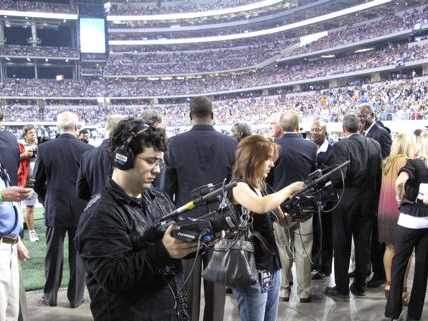 You probably know my wife Joke and I own and run Joke Productions, Inc. On certain shows (like Scream Queens on VH1) we have hundreds of people working for us. Story Producers. Editors. Art people. Sound department. Camera department. Grips. The list goes on and on.
Our goal is to make sure every person on set can do their job better than we can do it ourselves. However, if someone doesn’t cut it, we have a great insurance policy: us.
While we can step in and get the job done if we have to, that’s never our aim.
The goal is to staff great people in every position so that we, as Executive Producers, only focus on the overall creative vision of the show.
But Sometimes, You Will Do It All
Not every project has the kind of budget a show like Scream Queens has, especially pilots and pilot presentations (shorter tapes used to sell a TV show.)
This past weekend, Joke and I returned to our indie roots for a small pilot-presentation we are excited about. (We’re under NDA so I can’t say what it is.)
Budget: tiny.
Crew: lean.
3 of us.
Me, Joke, and Peter Spoerri, our EIC (Head of Production.) No sound man. No PA’s. No craft service. No breaks.
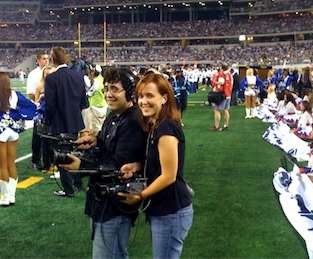
Joke and I each had a camera rigged with a short boom mic and a wireless receiver. We wired talent up on the fly with a mic pack, shot through the day and night (first shoot day was 16 hours), got up and did it all again…and again.
For post, we have a few dollars for an assistant editor to get the footage captured and grouped. I’ll be finishing the edit, making the graphics, color correcting, and sound mixing.
Not All Producers Do This
A lot of executive producers are not hands on. Take our advice: become a producer who IS hands on.
That way, if a project comes along that you’re passionate about, but there’s no money to complete it, you can dive in head first and make your vision a reality.
In this economy, you are your own greatest resource. Be good enough to do every job on set when you have to, and smart enough to hire people better than you when you can.
That’s a great path to a career as a Hollywood producer.